

| Some scientists
believe an enhanced greenhouse effect has been created
by large increases of greenhouse gases in the atmosphere.
This increase may have been caused by human activities,
especially the burning of fossil fuels. Every year billions
of tonnes of greenhouse gases are released into the
air. These include carbon dioxide (CO2), and methane
(CH4). Besides gases that may cause global warming,
other hazardous pollutants created by human activity
include sulphur dioxide (SOx), nitrogen dioxide (NOx)
and particulates.
About a quarter of greenhouse gas emissions come from
transport. Other sources include coal-fired power stations,
factories and increased agriculture, especially methane
from livestock. The increased concentrations of these
greenhouse gases, like an invisible blanket trapping
heat around the earth, are contributing to an enhanced
greenhouse effect and causing global warming.
This increase in global temperature is expected to affect
the water cycle. The water cycle has been an endless
cycle of evaporation-condensation-precipitation since
the world began. Evaporation occurs when the sun heats
water in lakes, oceans, rivers and streams. The liquid
water evaporates into a gas called water vapour.
Condensation occurs when the water vapour comes together
to make clouds. Precipitation occurs when water from
the clouds falls to earth as rain, hail or snow. Collection
occurs when the rain, hail and snow goes back into oceans,
lakes, rivers and streams.
However the natural rhythm of the water cycle may be
being disturbed by global warming because:
-- It has increased the amount of water vapour in the
atmosphere.
-- It has increased the extent of cloud formation.
-- It has produced higher rainfall in many areas.
This could lead to even greater warming because water
vapour is itself a greenhouse gas, and it is more efficient
at absorbing heat energy than carbon dioxide. This increased
warming could result in even more water vapour being
taken up by the atmosphere, leading to still greater
warming. This cycle has been described as a runaway
greenhouse effect.
Predictions based on computer simulations suggest that
an increase in average global temperatures may cause
major changes in world climatic patterns and local weather
patterns. Some of the possible effects of changing climatic
patterns that are caused by global warming include:
-- Some areas receiving much higher rainfall than at
present, resulting in greater flooding.
-- Other areas receiving much less rainfall than at
present, resulting in drought.
-- Changes in the distribution of plants and animals
around the world, with changing habitats.
-- Changes to patterns of agriculture around the world.
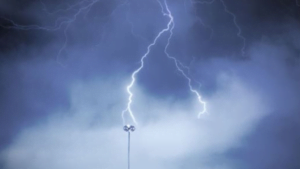
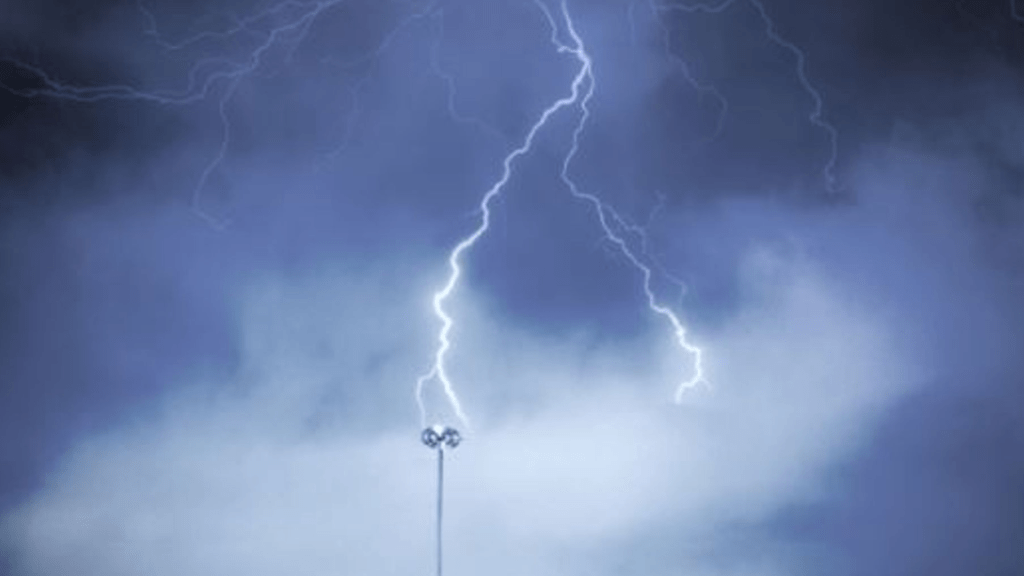
-- More severe storms.
-- More violent cyclones resulting from increasing sea
surface temperatures, with the cyclone belt extending
much further south, perhaps as far as Sydney and Perth.
-- The increasing of sea levels, due to thermal expansion
of the oceans. This could result in the flooding of
low-lying coastal areas.
-- The melting of glaciers and polar icecaps.
-- Reduction, or even disappearance of Australia’s
snow fields
|