

|
|
| |
| |
|
|
|
The word energy can be defined as "the
potential for causing changes", and therefore
energy is the cause of any change. The word is used
in several different contexts. The use of the word
in mainstream science has a precise, well-defined
meaning, which is most often not the case with its
many other usages.
However, the most common definition of energy, the
one usually taught in school science, is work that
a certain force (gravitational, electromagnetic, etc)
can do. It is the ability to do work. Due to a variety
of forces, energy has many different forms (gravitational,
electric, heat, etc.) that can be grouped into two
major categories: kinetic energy and potential energy.
According to this definition, energy has the same
units as work; a force applied through a distance.
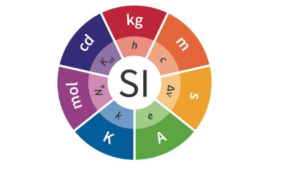
The SI unit of energy, the joule, equals one newton
applied through one meter, for example. Energy has
no direction in space, and is therefore considered
a scalar quantity.
|
|
Energy is a conserved quantity, meaning
that it cannot be created or destroyed, but only converted
from one form into another. Thus, the total energy
of the always remains constant.
In the context of society the word energy is synonymous
to energy resources, it most often refers to substances
like fuels, petroleum products and electric power
installations. This difference vis a vis energy in
natural sciences can lead to some confusion, because
energy resources (which represent usable energy) are
not conserved in nature in the same way as energy
is conserved in the context of physics. People often
talk about energy crisis and the need to conserve
energy,[10] something contrary to the principle of
energy conservation in natural sciences. Efforts,
normally referred to as energy conservation, are actually
efforts that are targeted at conserving currently
available energy resources that can be applied to
do useful work.
|
|
| |
|
|
|
|
| |
Since
the cost of energy has become a significant factor in
the performance of economy of societies, management
of energy resources has become very crucial. Energy
management involves utilizing the available energy resources
more effectively that is with minimum incremental costs.
Many times it is possible to save expenditure on energy
without incorporating fresh technology by simple management
techniques.[13] Most often energy management is the
practice of using energy more efficiently by eliminating
energy wastage or to balance justifiable energy demand
with appropriate energy supply. The process couples
energy awareness with energy conservation.
|
|
|
| Home
| About
Us
| Products
| Services
| Contact
Us |
| |
 |
| Copyright
2004 Global Energy Portal Network All rights reserved. |
 |
|
|